.jpg)
Speaking of Chengdu, maybe the first impression came up is chili and panda!
Chengdu, the capital of Sichuan Province, located in the west plain in the Sichuan Basin, is a famous historical and cultural city with a history over 3,000 years. It serves as the provincial center for politics, economy, culture, and transportation.
.gif)
.jpg)
Known as the land of abundance, Chengdu boasts plentiful local products, a pleasant climate, a large number of scenic spots and historical sites, and fine traditional handicrafts well known both at home and abroad.
Let’s explore this amazing city during Golden Week.
.gif)
Chengdu Research Base of Giant Panda Breeding
成都大熊猫繁育研究基地
What you could not miss in Chengdu is the world famous Chengdu Research Base of Giant Panda Breeding which is located about 25km out of Chengdu City. This huge institution replicates the natural habitat of the giant panda and is dedicated to preserving and increasing their population so they will not become extinct. March to May is the ‘falling in love period’ (wink wink). If you visit in autumn or winter, you may see tiny newborns in the nursery.
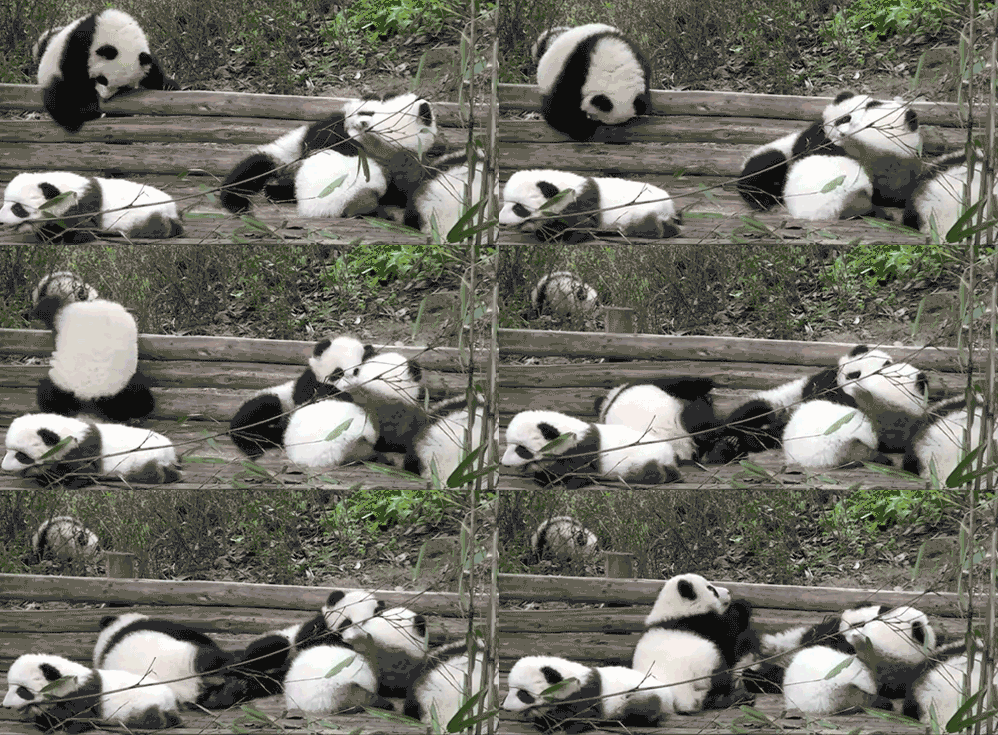
Try to visit in the morning, when the pandas are most active. Feeding takes place around opening time at 8 am, although you’ll see them eating in the late afternoon too. They spend most of their afternoons sleeping, particularly during the height of midsummer, when they sometimes disappear into their (air-conditioned) living quarters.
.jpg)
You are able to get real close-up to some pandas and photograph them as well as the so-called red pandas which really look and act like raccoons.
.jpg)
.jpg)
More information: http://www.panda.org.cn/english/
Qing Yang Temple
青羊宫
Located alongside Culture Park, this is Chengdu’s oldest and most extensive Taoist temple. Qingyang (or Green Ram) Temple dates from the Zhou dynasty, although most of what you see is Qing. A highlight is the unusually squat, eight-sided pagoda, built without bolts or pegs.
.jpg)
Wenshu Manjushri Temple
文殊院
This Tang dynasty monastery is dedicated to Wenshu (Manjushri), the Bodhisattva of Wisdom, and is Chengdu’s largest and best-preserved Buddhist temple.
.jpg)
The air is heavy with incense and the low murmur of chanting; despite frequent crowds of worshippers, there’s still a sense of serenity and solitude. The temple’s popular (and newly renovated) vegetarian restaurant and tea house are a lovely attraction all their own.
.jpg)
The ‘old’ neighborhood streets surrounding the temple are crowded with tea houses, snack stalls, and shops; touristy, yes, but fun to wander through. Nearby Wenshu Manjushri, there’s a tiny restaurant call Dong Zi Kou Zhang(洞子口张), they served very nice noodles and wonton. The famous one is called tián shu? miàn(甜水面), literally ‘sweet water noodles’- thick, square-cut noodles in a sweet-and-spicy sauce.
.jpg)
.jpg)
Thatched Cottage of Du Fu
杜甫草堂
It’s the former residence of the famous Tang Dynasty poet, Du Fu.
During nearly four years of his stay here, Du Fu composed more than 240 poems reflecting upon the misery and the real life of the common people.
.jpg)
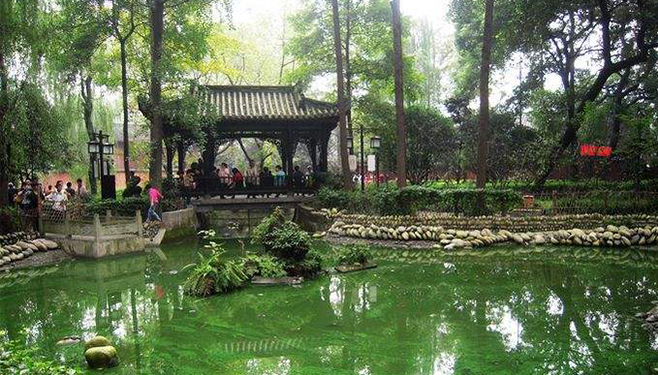
Although the original residence disappeared long ago, the site was renovated in the Ming and Qing dynasties and enlarged to its present scale as a park with fine gardening. The thatched cottage is esteemed as the holy land of Chinese traditional literature, and the place to memorize this Saint of Poem.
.jpg)
.jpg)
Temple of Marquis Wu
武侯祠
Located adjacent to Nanjiao Park and surrounded by mossy cypresses, this temple (rebuilt in 1672) honors several figures from the Three Kingdoms period, namely legendary military strategist Zhuge Liang (诸葛亮) and Emperor Liu Bei (刘备, his tomb is here). Both were immortalized in the Chinese literature classic, Romance of the Three Kingdoms (三国演义).
.jpg)
Jinli Gujie
锦里古街
Jinli Gujie is to the east of Temple of Marquis Wu, is one of Chengdu’s restored ancient alleyways, crammed with souvenir stalls and eateries. Unique commercial street decorated in rows of ancient buildings; a perfect place to shop souvenir and find local snacks.
.jpg)
Walking in this street, historic lanes, old official residences, vernacular dwelling, inns, and shops will bring you back to the ancient China. The elegant style of the architectures tells you what Sichuan looks like during the Qing Dynasty.
.jpg)
After its recent renovation, Jinli Ancient Street has become one of the busy trading streets in Chengdu. On both sides of this 350-metre street, there are numerous small stores selling handicrafts, antiques, and souvenirs such as Shu embroidery, lacquer products, folk handicrafts, old porcelain dishes or calligraphies, and paintings. Within the area, there are also hotels, restaurants, teahouses, bars, and cafés. The street is very popular with both locals and tourists, especially at night.
.jpg)
In the middle of the street, there is a wooden stage which looks like an ancient pavilion. It is used from time to time for performing classic Sichuan Operas. You can enjoy folk music along with the actor’s beautiful, quick costume and makeup changes. The actors’ perfect performances will wow you.
.jpg)
When you reach the end of the street, you’ll be tempted by the aroma of delicious local snacks. The citizens of Chengdu are born epicures and they are particularly fond of dining. Here there are many restaurants as well as sidewalk booths offering local snacks.
Kuan Zhai Alley
宽窄巷子
Kuan Zhai Alley is one of the top three historic preservation districts in Chengdu City. It is formed by three alleys called Kuan Alley (Wide Alley), Zhai Alley (Narrow Alley), and Jing Alley.
.jpg)
The major buildings on this site are courtyards and ancient style streets. And now, it is a cultural site consisting of 45 Qing Ming Dynasty style courtyards, modern villas, and gardens, as well as theme hostels.
.jpg)
In the Qing Dynasty (1718), the government has sent about 3,000 soldiers to Tibet. After the war was stopped, over one thousand Baqi Garrison and their families have stayed in Chengdu forever. Kuan, Zhai and Jing Alleys were included in the 42 alleys for soldiers.
.jpg)
However, the process of urbanization gradually swallows up the historical relics of old Chengdu, and nowadays only three out of 42 alleys, that is, Kuan, Zhai, and Jing Alleys have remained with the reserve of the past signs.
.jpg)
.jpg)
Teahouse
茶馆
Tea culture in Chengdu has been evolved into unique characteristics of the Bashu “tea culture”. Chengdu teahouses have rich social functions: leisure, parties, and entertainment and private courts.
.jpg)
Chengdu teahouses have always been very flourishing. Whether it is in a land of scenic spot, or downtown streets, everywhere you can see the tea house full of local folk features. These tea houses charge a little fee but with courteous service. Generally, a cup of fragrant tea and a plate of food can make people stay there for half a day.
.jpg)
Sanxingdui
三星堆博物馆
If you have a chance to go a bit further, Sanxingdui (literally: “three stars mound”) is a perfect choice.
It is the largest and oldest ruins of the ancient Shu culture with the most abundant cultural connotation in the Southwest of China.
.jpg)
Sanxingdui, the ruins of the capital of the ancient Shu, a Kingdom over 4,000 years ago, is located in Guanghan City.
The site covers an area of 120,000 square meters. In 1986, a great number of relics were brought to lights, among which six pieces are evaluated as national treasures, representing the best of the art of copper in China.
.jpg)
The discovery of Sanxingdui predates 2,000 years of Sichuan’s history and proves that the upper reaches of the Yangtze and the Yellow River region are the cradle of the Chinese civilization.
.jpg)
.jpg)
The Sanxindui is recognized as one of the world’s most important ancient remains because of its vast size, age, and cultural contexts.
【Recommended Visiting Time】2 to 3 hours
More information: http://sxd.cn/en/index.html
Foodies’ Choice for good
Chen Mapo Tofu
陈麻婆豆腐
Chen Mapo Tofu is one of the traditional dishes of Han nationality in Sichuan and it is a China time-honored brand named by the government.
.jpg)
.jpg)
Chen Mapo Toufu was established in Qing dynasty (1862), and it was opened in the north of Chengdu. In 1999, Chen Mapo Toufu Restaurant was rewarded as “Appointed Travelers Host” of Chengdu.
Tang You Guo Zi (Sweet Fried Rice Balls)
糖油果子
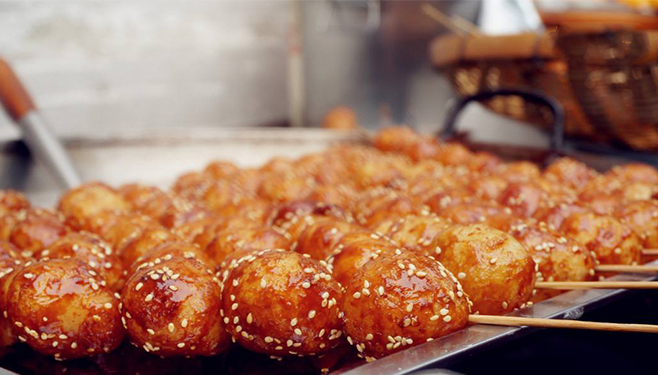
Sweet fried rice balls are known as Tang You Guo Zi. They are made from glutinous rice and are fried in the dark sugar to make the crust crunchy.
Guokui (Pancakes)
锅盔
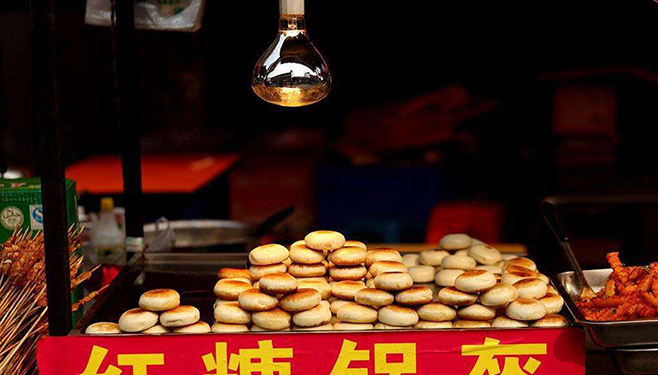
Guokui is a popular traditional snack in Chengdu, which includes various recipes. It is loved for the crispy skin and substantial stuffing of the pancakes.
Hotpot
火锅
Hotpot is very popular in Chengdu and is known for its spicy and hot flavor. Although this kind of hotpot is taken as the Chongqing specialty by the locals, it has become famous and popular all over the country for a long time.
A big pot filled with hot spicy oil and surrounded by plates of raw meats and vegetables. The pieces of meat and vegetables are sliced very small so they will cook very quickly.
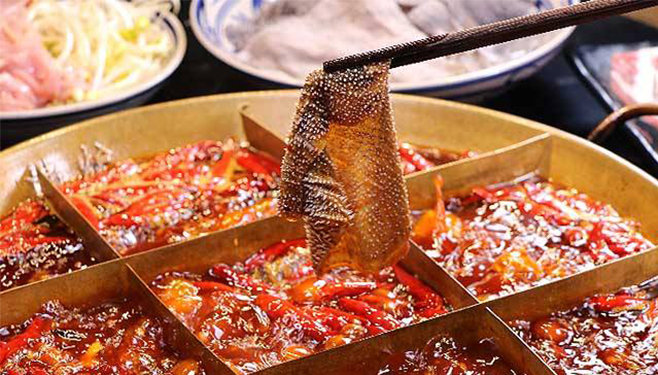
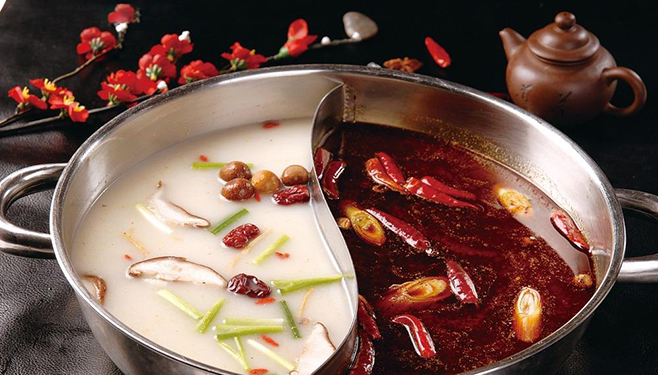
Most of the pots used in hotpot are divided into two sections. One-half is filled with the spicy oil, and the other is filled with a delicious broth for those who are not a big fan of spicy foods. Restaurants are also more than happy to turn down the heat on request.
Long Chao Shou (Chengdu Wonton)
龙抄手
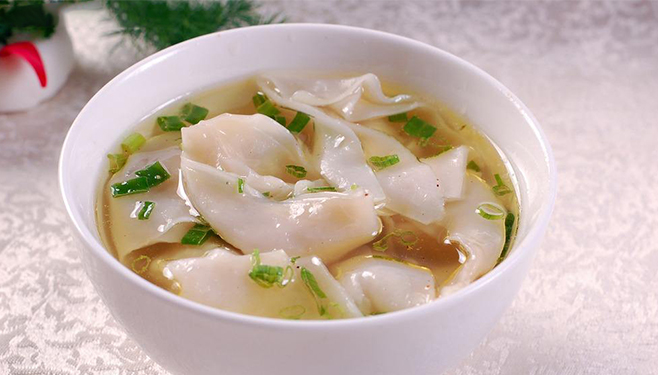
Chao Shou is also a local specialty. Commonly known in Canton and the West as “wonton soup”, the dumplings bobbing in this light broth are soft, tender and stuffed with delicious ingredients. This is one traditional Chinese food that has remained relatively the same in Western Chinese restaurants.
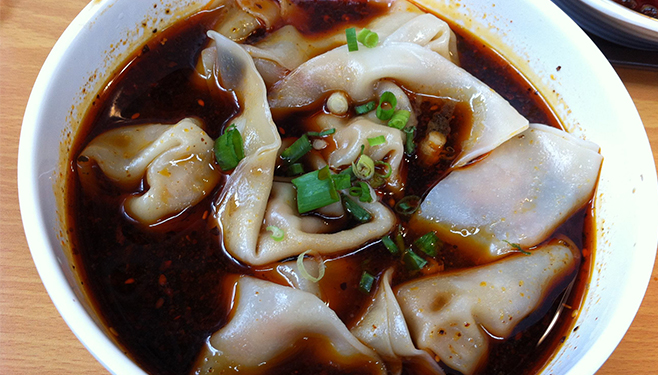
Long Chao Shou is a little similar to dumpling, also stuffed with pork and vegetables, and the difference is that the dough is thinner and served in a soup. There are two kinds of soups available: spicy, or not spicy. Each one makes the dish taste completely different.