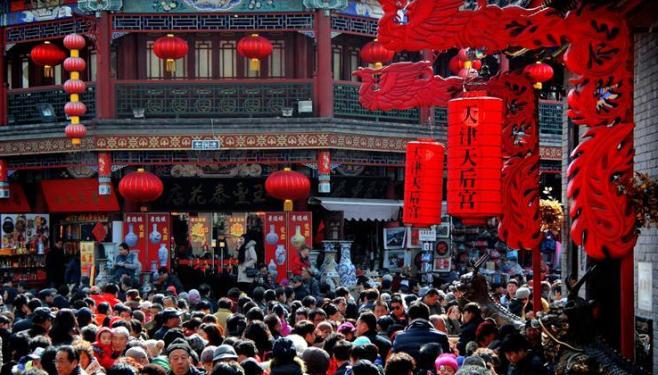
The Chinese New Year (otherwise called Spring Festival), has more than 4,000 years of history and it is the grandest and the most important festival for Chinese people.
Grab this chance to get together with your family and friends to celebrate the advent of spring and learn more about this fascinating Chinese tradition!
The History
Originating during the Shang Dynasty (about 17th – 11th century BC), the Chinese calendar works according a specific combination of solar and lunar calendar, based on rather complex astronomical calculations, including the longitude of the sun. It always falls on the second new moon after the winter solstice and in 2015, Chinese New Year Day falls on February 19th.
Being China’s major traditional holiday, it is also celebrated in other parts of Southeast Asia, including Vietnam (where New Year’s Day is called “Tet”), Malaysia, Taiwan, and of course, Hong Kong.
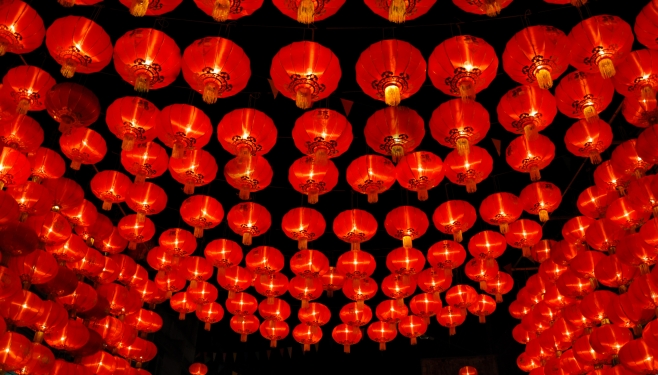
A fascinating legend holds that the Chinese New Year began with a struggle against an ancient mythical beast called the Nián (年), who would come on the first day of the New Year to eat children, livestock, and crops. In order to protect themselves from the Nián, villages put food offers on their doorsteps believing that the creature would eat them and leave everything else alone. And since it was also believed that the Nián was afraid of the color red and fire, people would hang red lanterns outside and set off firecrackers all night long. Exactly the same as they do today!
On New Year’s eve from any rooftop terrace of Beijing you will be able to enjoy the amazing view of the entire city lit up by spectacular fireworks which keep exploding all night long until dawn.
Starting from 1949, under the rule of Mao Zedong, the government forbade the celebration of the traditional Chinese New Year and started following the Gregorian calendar. But at the end of the 20th century, Chinese leaders were more inclined to embrace again the Chinese tradition and so in 1996, a week-long vacation was instituted during the holiday–now called Spring Festival in order to give people the opportunity to travel home and to celebrate the New Year.
The Tradition
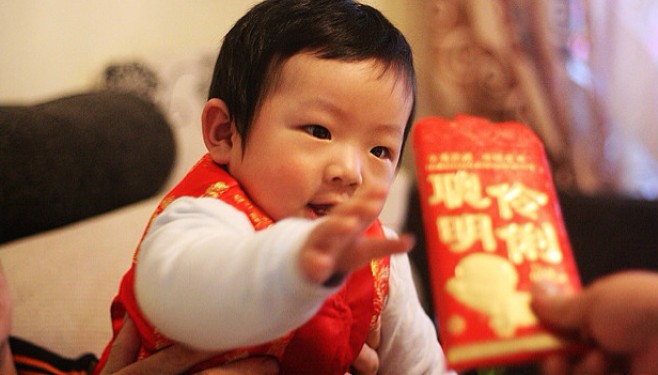
As early as 14th century B.C. (Shang Dynasty), the ancient Chinese calendar, on which the Chinese New Year is based, worked as a religious, dynastic and social guide and the holiday was a time to honor household and heavenly deities as well as ancestors. During this time, business life came nearly to a stop, homes were thoroughly cleaned to rid them of Huìqì (晦气) or inauspicious breaths from the old year and cleaning was also meant to appease the gods who would be coming down from heaven to make inspections. People also used to offer ritual sacrifices of food and paper icons to gods and ancestors and household gates were decorated with lanterns and scrolls printed with lucky auspices. Elders gave out money to children in red paper envelopes called hóngbāo (红包).
You might have noticed how the greeting cards section of every Chinese shop is now filled with shiny red envelopes decorated in gold and carrying messages of good luck and prosperity. Chinese kids look forward to it in the same way your kids wait for Santa carrying presents at Christmas Eve, and families save for months to prepare for the exchange of the hongbao.
Today the rites of the holiday no longer hold their original religious value and for some members of the younger generation the holiday has evolved from an opportunity to renew family ties to a chance for relaxation from work.
Yet, people remained sensitive to the fascinating traditions associated to the New Year and to the Chinese zodiac, the cycle of twelve stations or “signs” along the apparent path of the sun through the cosmos. Each New Year is marked by the characteristics of one of the 12 zodiacal animals: the rat, ox, tiger, rabbit, dragon, snake, horse, goat, monkey, rooster, dog and pig. 2016, after the previous year of the Goat, is a year of the Monkey (猴 hóu).
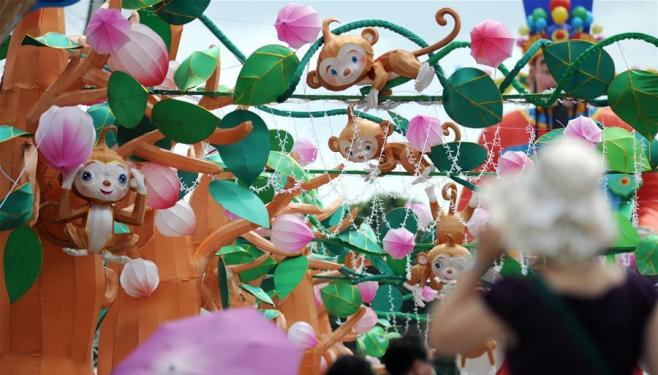
Legend has it that in ancient times, Buddha asked all the animals to meet him on Chinese New Year. Twelve came, and Buddha named a year after each one. He announced that the people born in each animal’s year would have some of that animal’s personality.
Those born in monkey years are often intelligent, eloquent, adaptable, flexible and positive.
Lucky colors: white, blue, gold
Lucky flowers: chrysanthemum, crape-myrtle
Year of Birth: 1944, 1956, 1968, 1980, 1992, 2004
Lucky months: September, January
Lucky numbers: 4 and 9
The Food
Food is the cornerstone of the New Year’s celebrations. Chinese New Year is an opportunity to honor family and friends, and to enjoy some culinary traditions which ensure an auspicious beginning to the lunar New Year. Each individual dish is steeped in tradition and is a homonym for a particular wish in the upcoming year. Here some typical dishes and a recipe for the most traditional New Year’s Eve dinner:
Tangerines and Oranges. Displaying and eating these fruits is said to bring wealth and luck. In fact, the Chinese for orange (and tangerine) is 橙 (chéng), which sounds the same as the Chinese for ‘success‘ (成chéng). One of the ways of writing tangerine (桔 jú) contains the Chinese character for luck (吉 jí ).
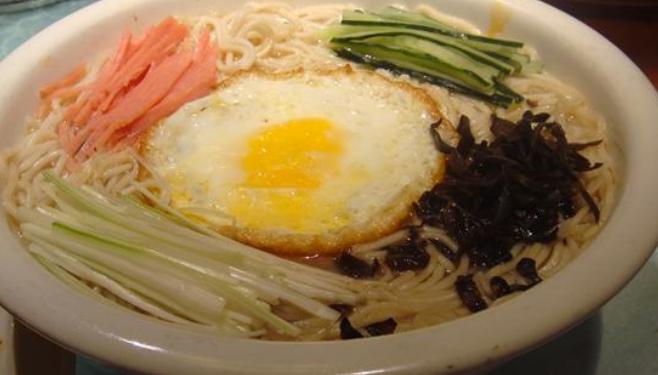
Longevity Noodles 长寿面, chángshòu miàn. Long noodles embody the concept of longevity. They are usually served uncut and boiled, fried or in soup with meat and vegetables.
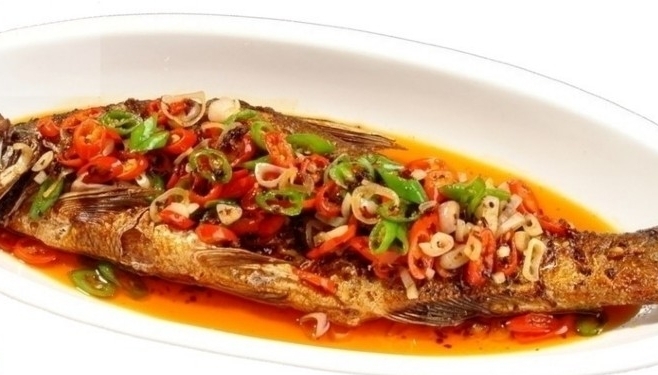
Fish 鱼, yú. The key to this dish is to serve the fish whole with head and tail intact to represent a good beginning and a good end for the coming year. Serving fish this way is also supposed to symbolize wealth, as the Chinese word for fish, ‘Yú,’ sounds like the word for abundance. Chinese people always like to have a surplus at the end of the year, because they think if they have managed to save something at the end of the year, then they can make more in the next year.
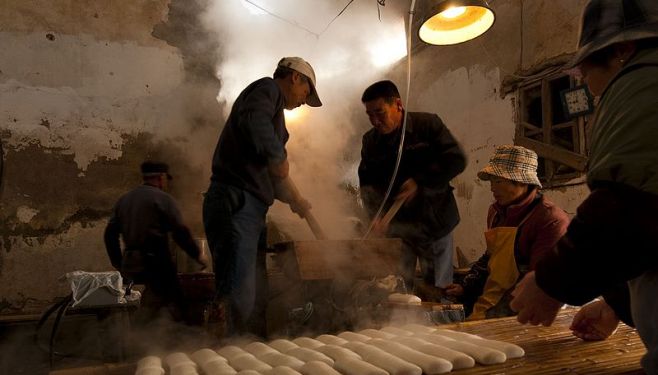
Rice Cake 年糕, niángāo. The tradition of eating rice cake goes back 3,000 years. The Chinese word for rice cake, or niángāo年糕, correlates to the phrase “年年高升, nián nián gāoshēng ” which means “increasing prosperity year after year.” Eating rice cakes also celebrates the beginning of the rice harvest in the spring. The steamed sweets are made of glutinous rice flour, brown sugar, and oil. Some versions have white sesame seeds, red dates, or nuts in them.
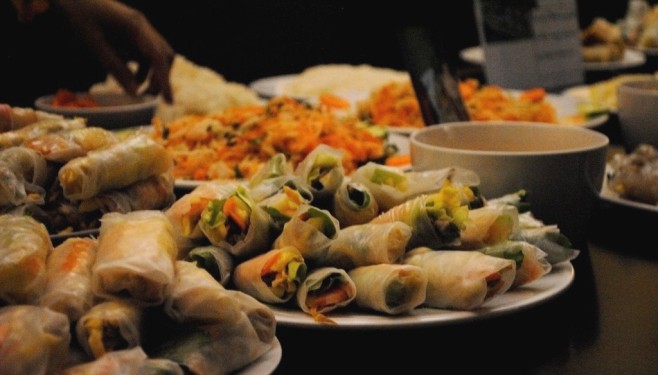
Spring Roll 春卷chūnjuǎn. Spring roll is a Cantonese dim sum dish that’s named after the Spring Festival. The words chūnjuǎn 春卷 literally mean spring and roll. The golden color and the shape of the fried spring rolls represent gold bars – which, of course, symbolize wealth.
Dumplings, 餃子jiǎozi. This dish is particularly traditional for the lunar New Year as the shape of the dumplings are said to resemble old ingot-shaped coins (元宝, yuánbǎo). As such, the dumplings are meant to bring eaters prosperity and wealth. It’s tradition to eat them at midnight on New Year’s Eve, and hide a clean coin inside one of the dumplings. Legend has it that the more dumplings you eat during New Year celebration, the more money you can make in the upcoming cycle.
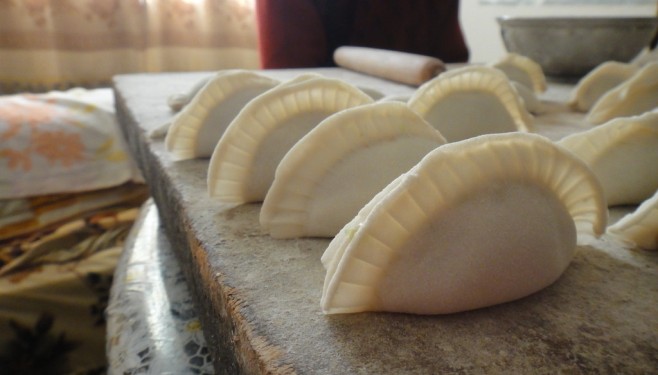
Please download this PDF and check out the Dumplings recipe we selected for you! https://www.refoxrelocation.com/wp-content/uploads/2015/02/RECIPE-Final.pdf